8th National Housing and Homelessness Forum
Walking alongside, in partnership: rethinking home ownership for First Nations families.
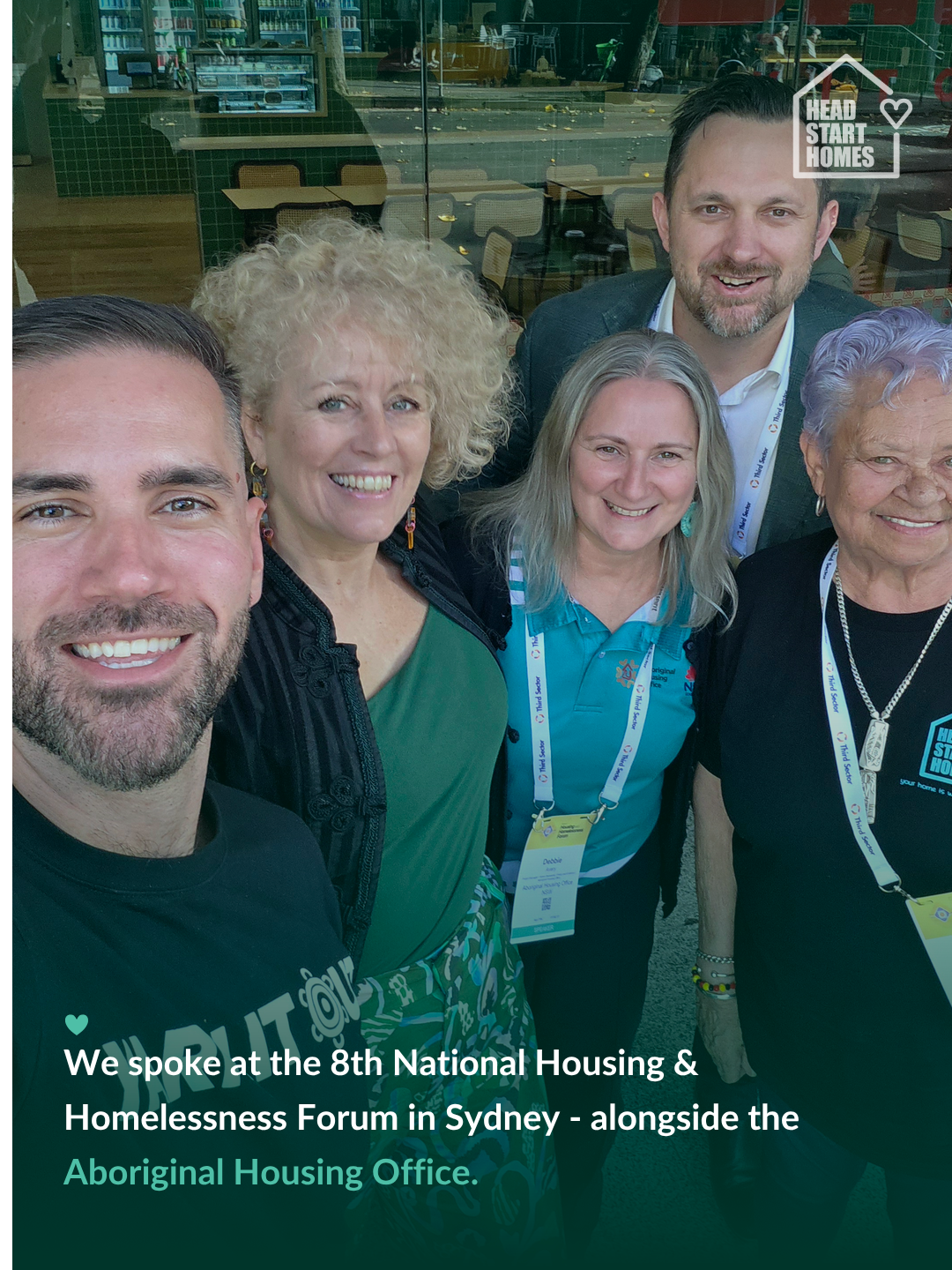
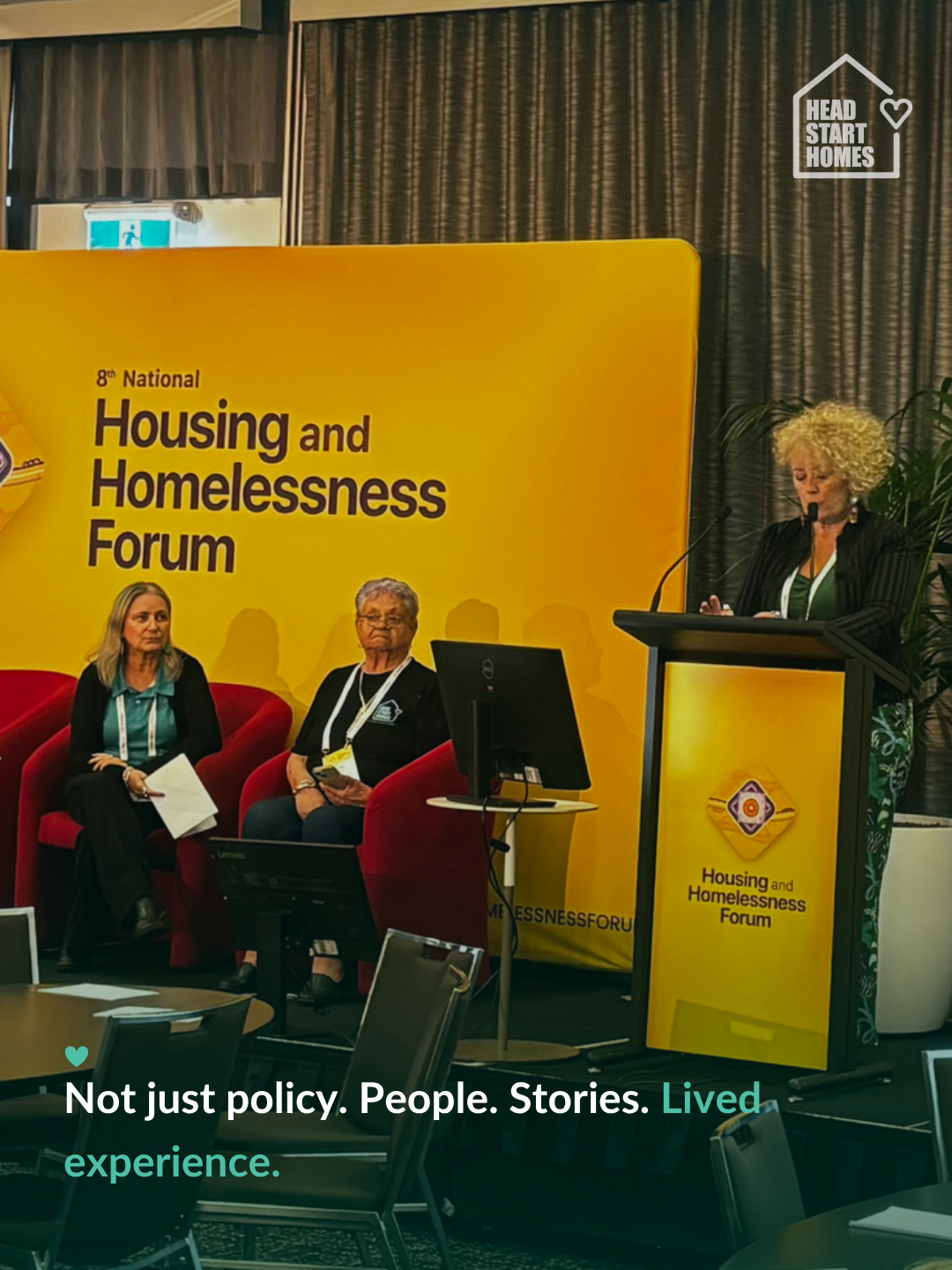
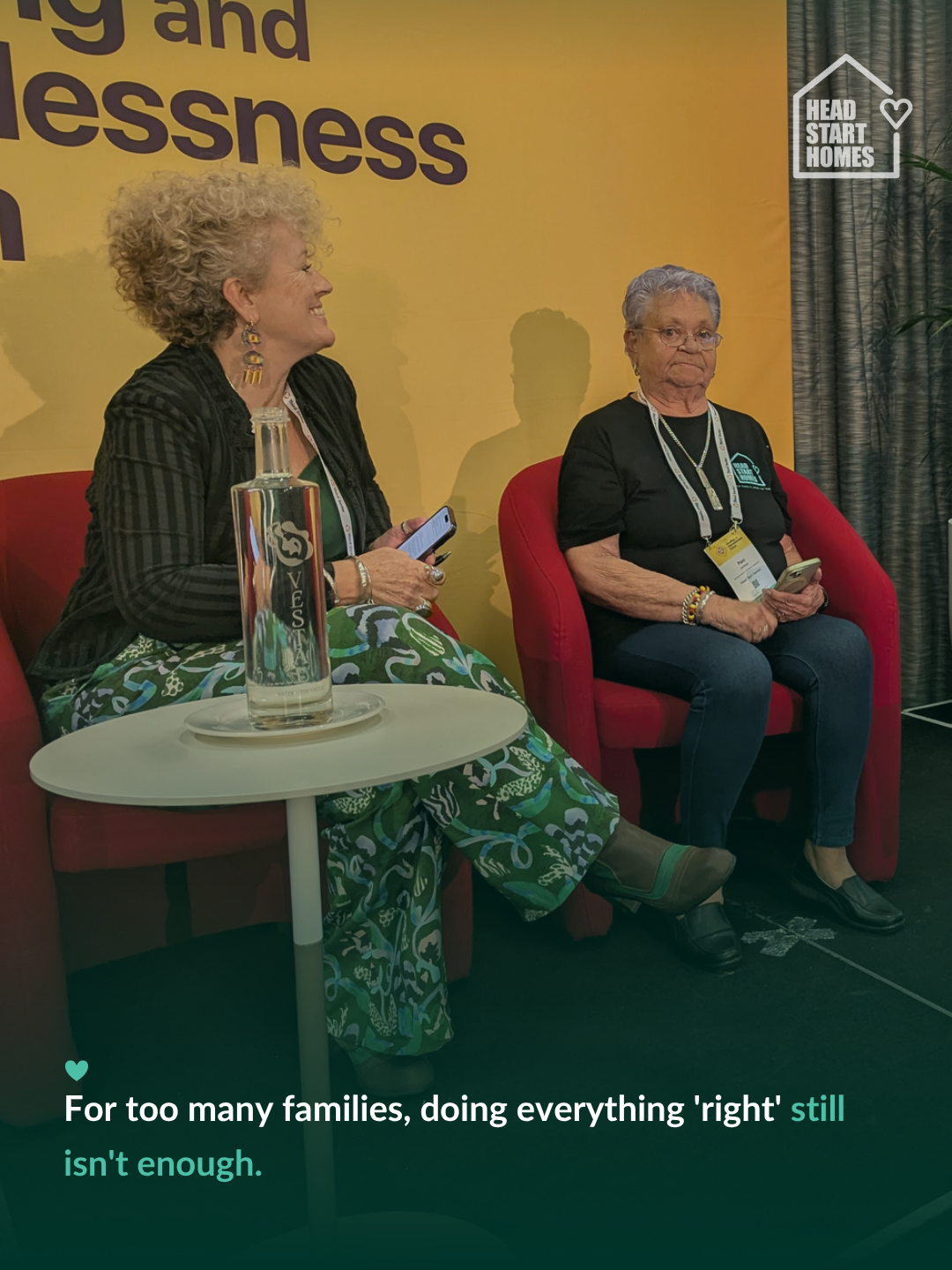
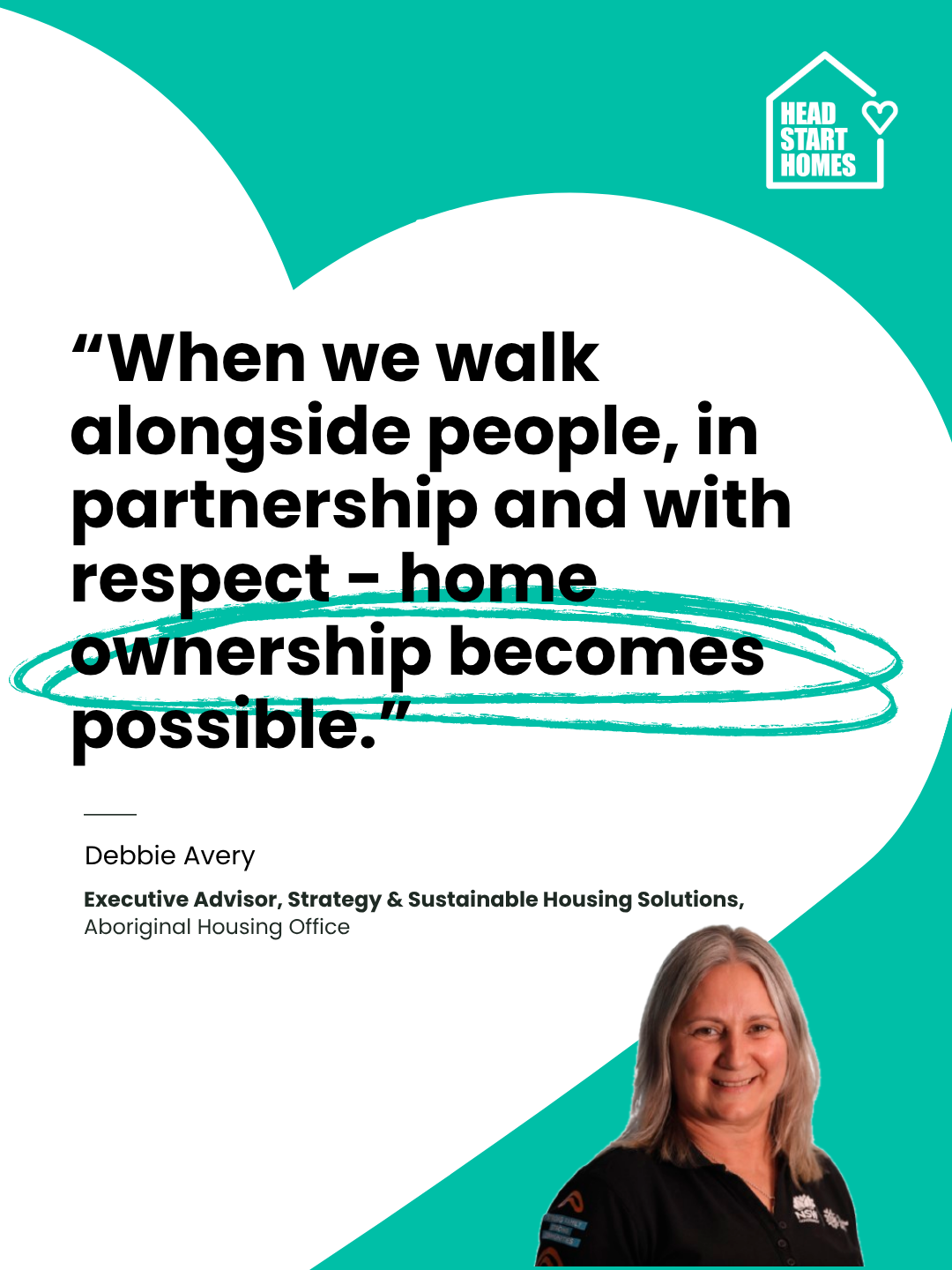
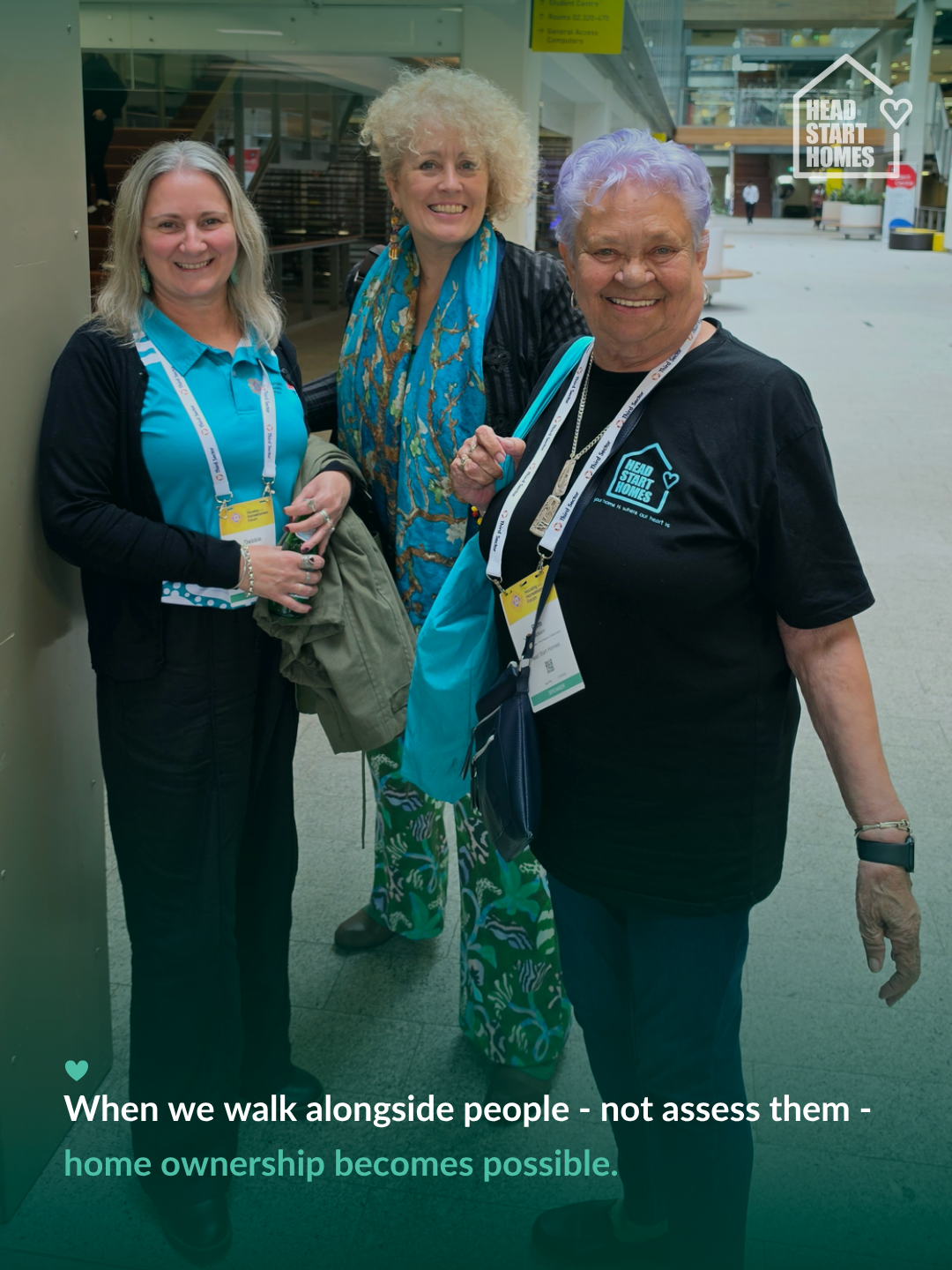

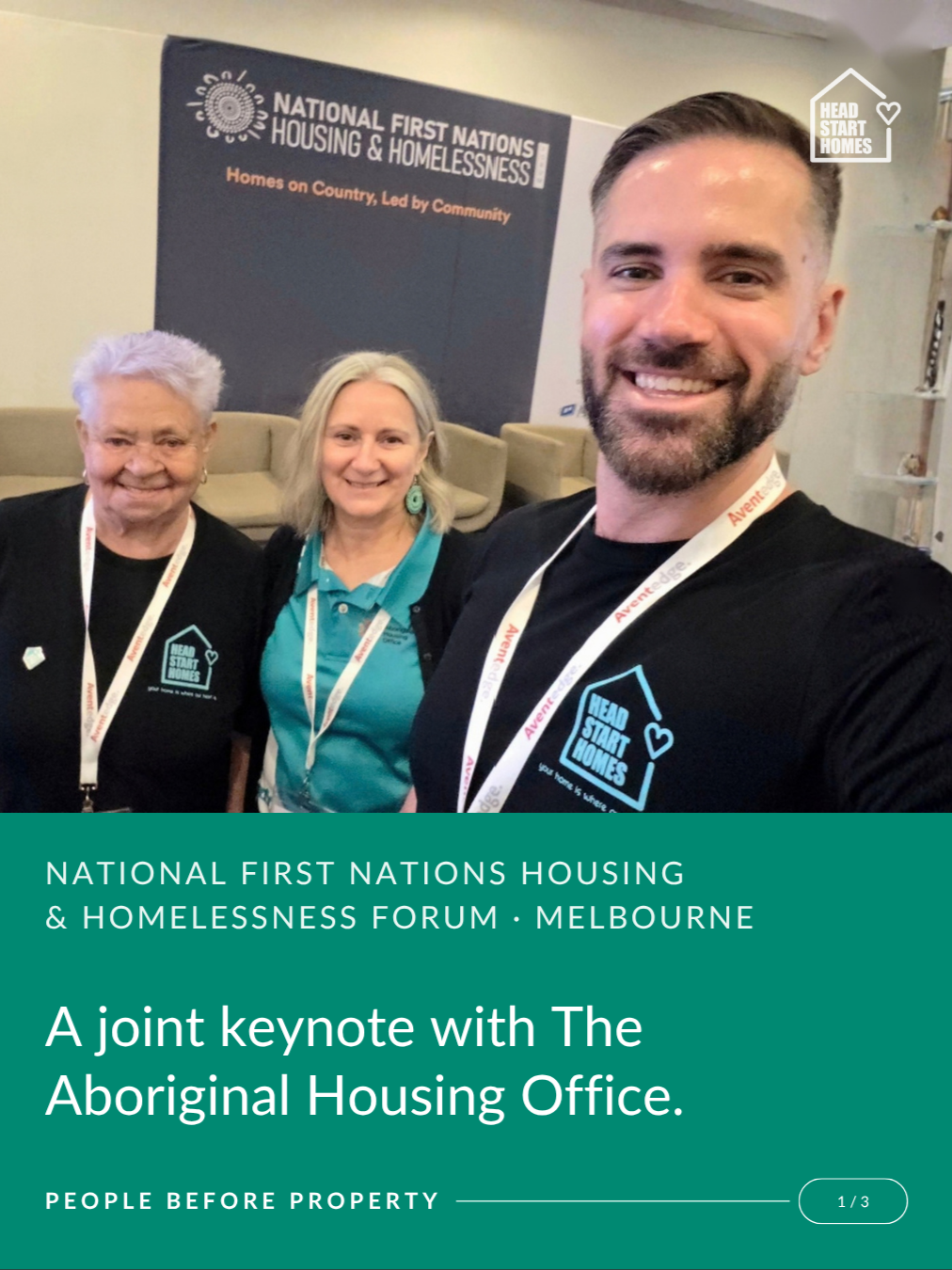
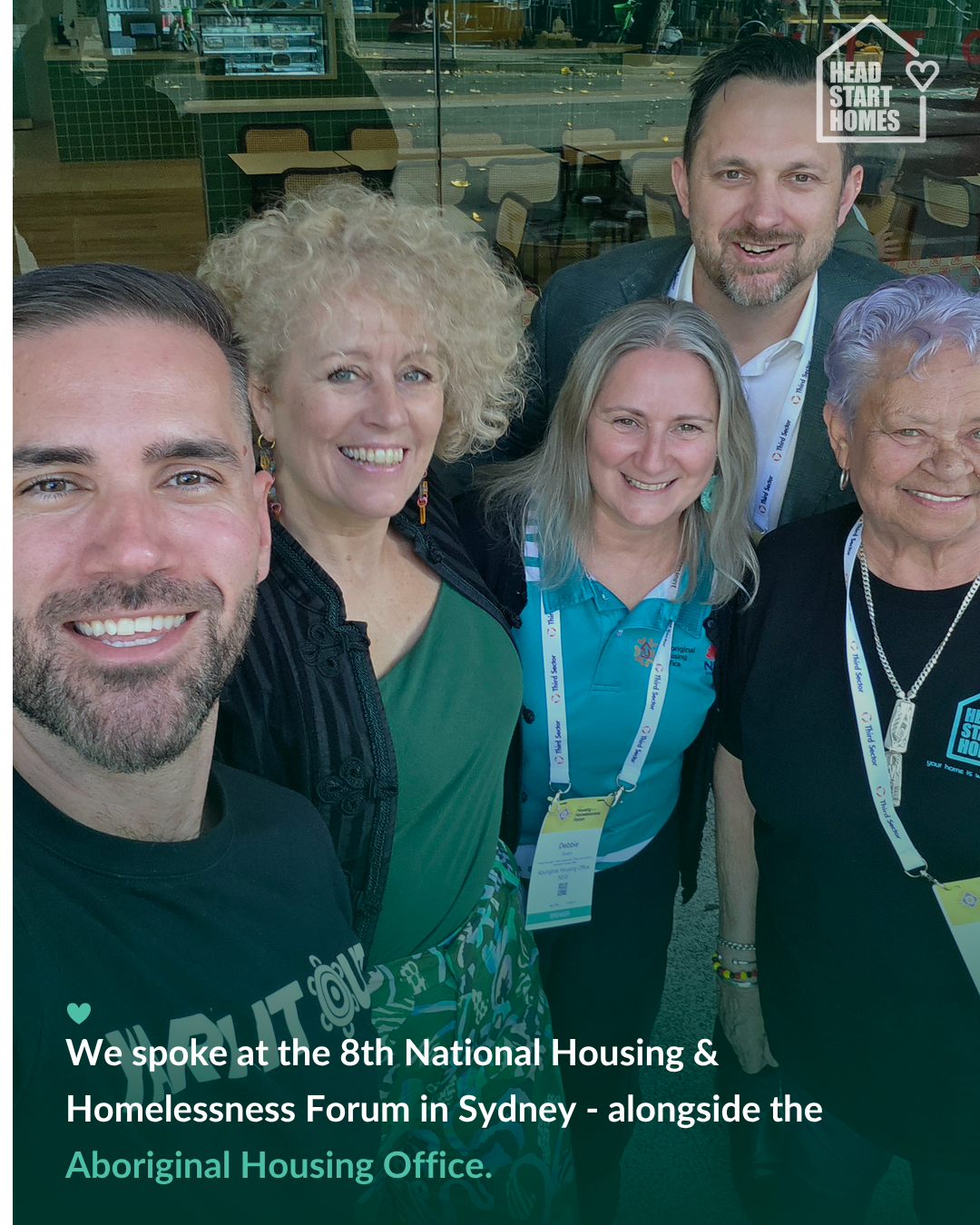
Head Start Homes was invited in May 2026 to present at the 8th National Housing and Homelessness Forum alongside Debbie Avery from the NSW Aboriginal Housing Office (AHO) - one of our earliest funders and a key leader in advancing more equitable pathways to home ownership for First Nations families.
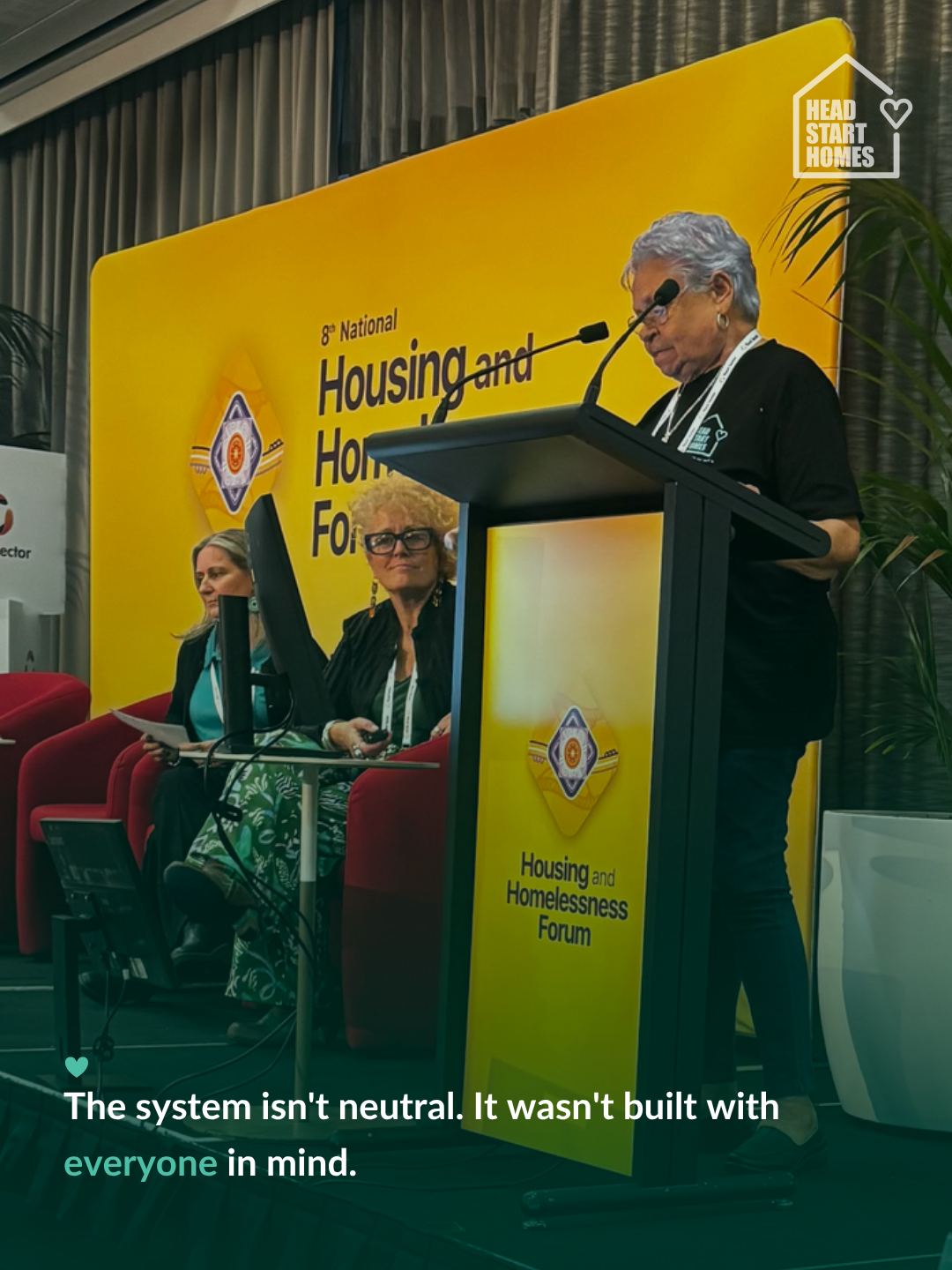
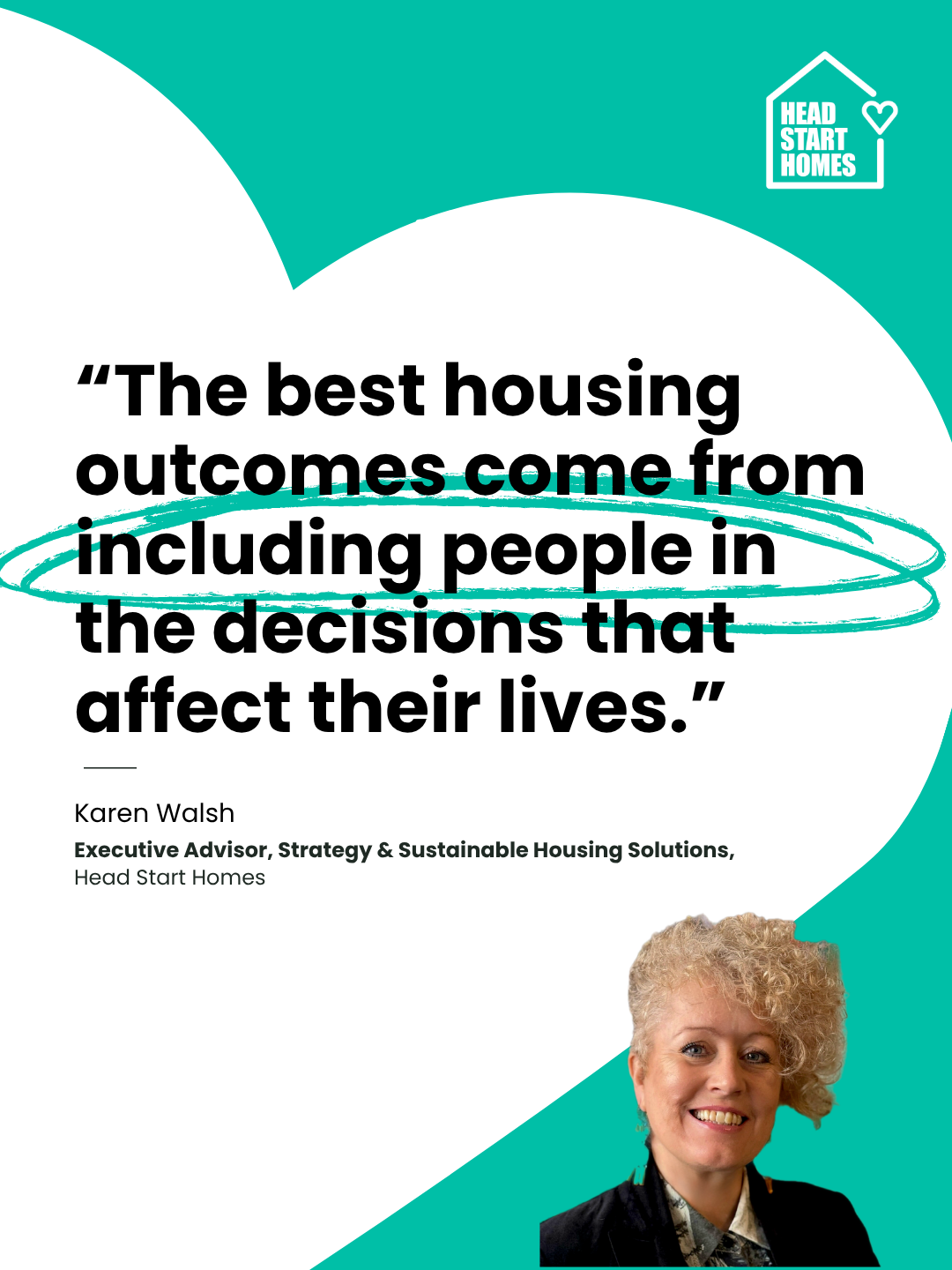
Pam Jackson, our First Nations Collaboration and Liaison Officer, spoke from lived experience about a housing system that was built without First Nations families in mind. Together with Karen Walsh, our Executive Advisor, Strategy and Sustainable Housing Solutions, they brought into the room what we’re seeing on the ground - and why it’s changing how we think about a fair pathway to home ownership.
The system wasn’t built for everyone
The housing system isn’t neutral.
It was built on a set of assumptions about how people earn, save and live - and for too many First Nations families, those assumptions never fit.
The result is a pathway to home ownership that quietly shuts people out before they’ve even begun.
At the Forum, that truth was named directly.
Invited to speak, Pam stood at the front of the room - not to present a model, but to speak from her own life. And the room listened.
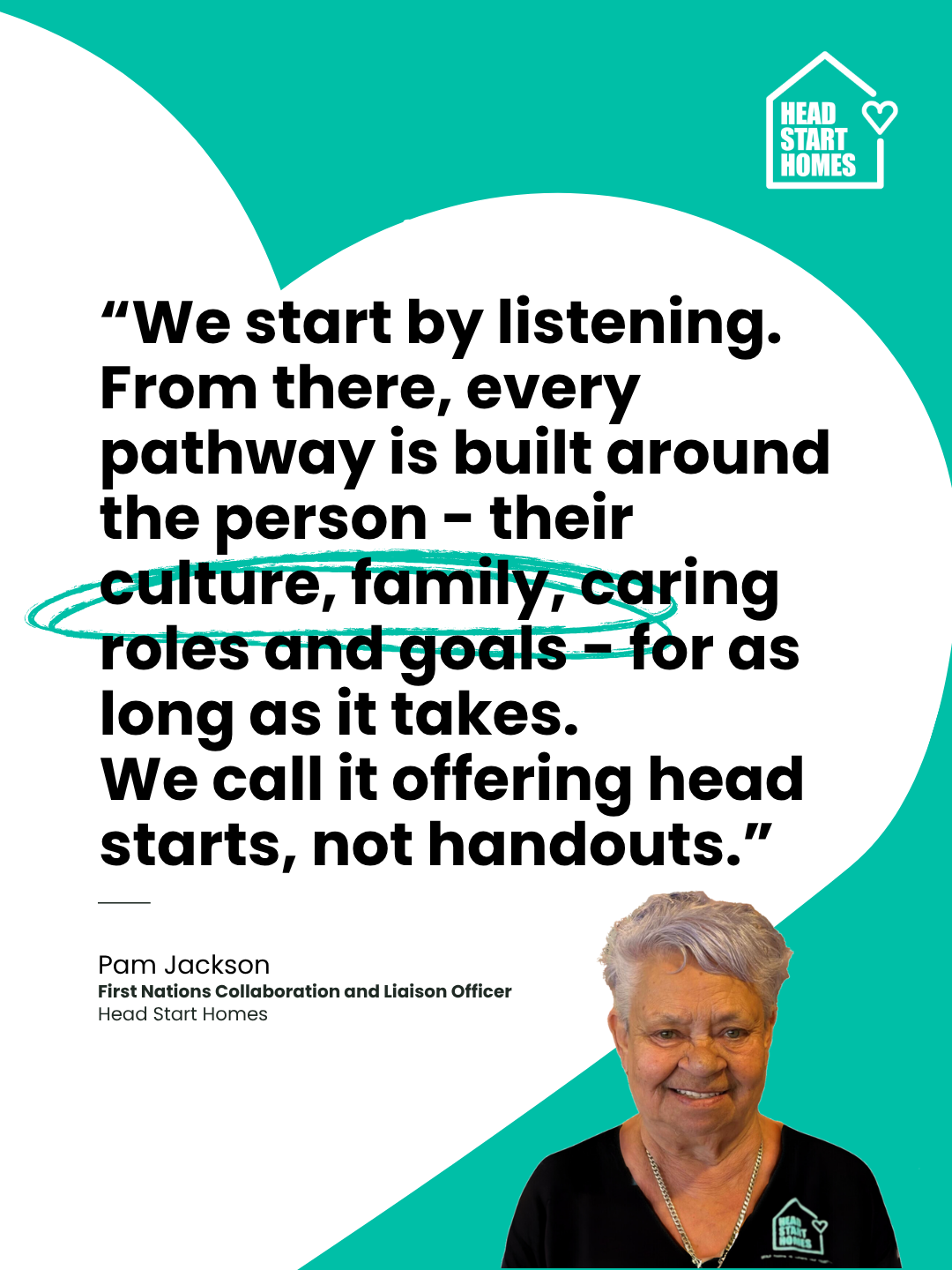
“We start by listening. From there, every pathway is built around the person - their culture, family, caring roles and goals - for as long as it takes.
We call it offering head starts, not handouts.”
- Pam Jackson
What it looks like in practice
The presentation shared Braydon’s story.
At just 24, Braydon - a proud Wiradjuri man - became a homeowner through dedication and support from the Head Start Homes team. His goal is to inspire other young people to see what’s possible.
His story reflects what happens when barriers are removed and pathways are built differently - not closed doors, but clear options, support, and a process that feels possible.
Pam spoke about the role she plays in creating culturally safe pathways - building trust, connection, and confidence so First Nations families can take that first step.
Debbie Avery also reflected on the strength of the partnership between the Aboriginal Housing Office and Head Start Homes - and the impact that collaboration is already having for First Nations families accessing home ownership.
As part of this work, 20 social and affordable homes have already been freed up across NSW - creating secure housing opportunities for others in need.
The people the system overlooks
What we continue to see is people doing everything that’s asked of them - holding down work, raising families, planning ahead - and still locked out of home ownership.
Not because they aren’t ready.
But because the system doesn’t reflect how people actually live.
Through our work, we see three consistent barriers:
The know-how barrier - where navigating the system is complex, and the support to do so is hardest to reach for those who need it most
The deposit barrier - where policy settings can unintentionally penalise progress, particularly for social housing tenants
The supply barrier - where waitlists stretch for years and affordable, secure housing options remain limited
For First Nations families, these gaps are wider still.
Standard lending models rarely reflect larger households, kinship structures, intergenerational care, or the lived impact of a system that has historically excluded them.
What we brought into the room
What Pam and Karen brought into that space wasn’t theory or assumptions.
It was truth - grounded in experience.
“When we walk alongside people, in partnership and with respect - home ownership becomes possible.”
That line reflects how we work.
The difference between assessing someone and walking alongside them is the difference between a transaction and a relationship.
We start by listening. From there, every pathway is built around the person - their culture, family, responsibilities and goals - for as long as it takes.
Why it goes beyond one home
A home doesn’t just change where someone lives.
It changes what becomes possible - for the generations that follow. Confidence is rebuilt. Stability grows. A foundation is created.
And the impact doesn’t stop there.
When one family is supported into home ownership, it also creates space for another - freeing up a social or affordable home that can then be accessed by someone else in need.
The change ripples outward: one family builds stability, while another gains access to housing that wasn’t previously available.
Walk alongside us
If you’re working to make home ownership fairer - in policy, finance or community - we’d love to walk alongside you too.
Contact us to explore partnership opportunities or to invite our team to speak at your next event - https://www.headstarthomes.org.au/contact. We’d love to hear from you.
People Before Property