Helping to Shape National Discussion on Housing Security in Retirement at Parliament House
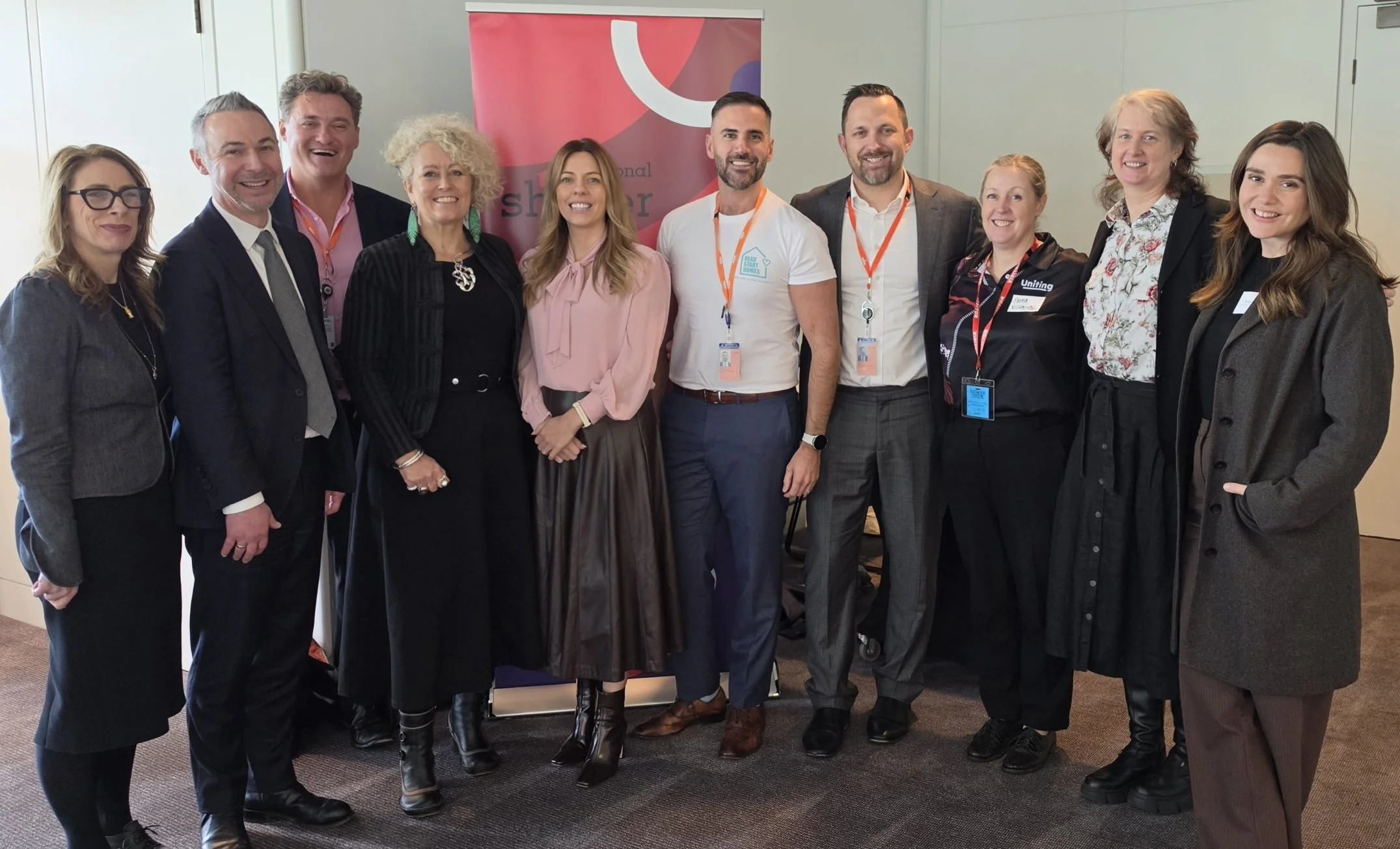
At the National Shelter Housing at the Edge: Retiring Australians in the Private Rental Market held at the Parliament of Australia, we heard from two brave women who shared what it is like to grow older in a system that has quietly failed them.
They have worked hard.
They have raised children.
They have contributed for decades.
And yet both spoke about living with the constant fear of homelessness. Not because of poor choices, but because the housing system is not designed with them in mind.
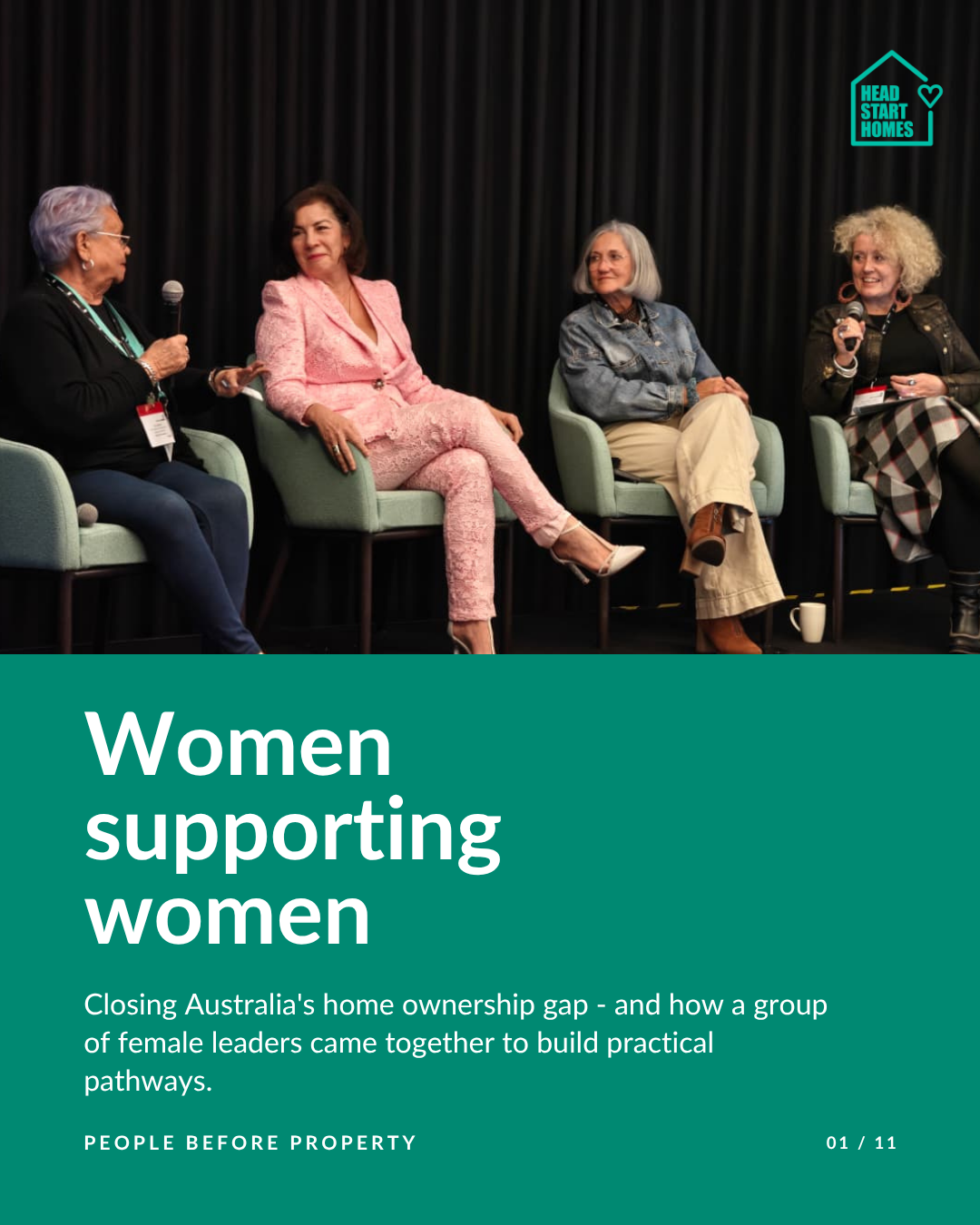
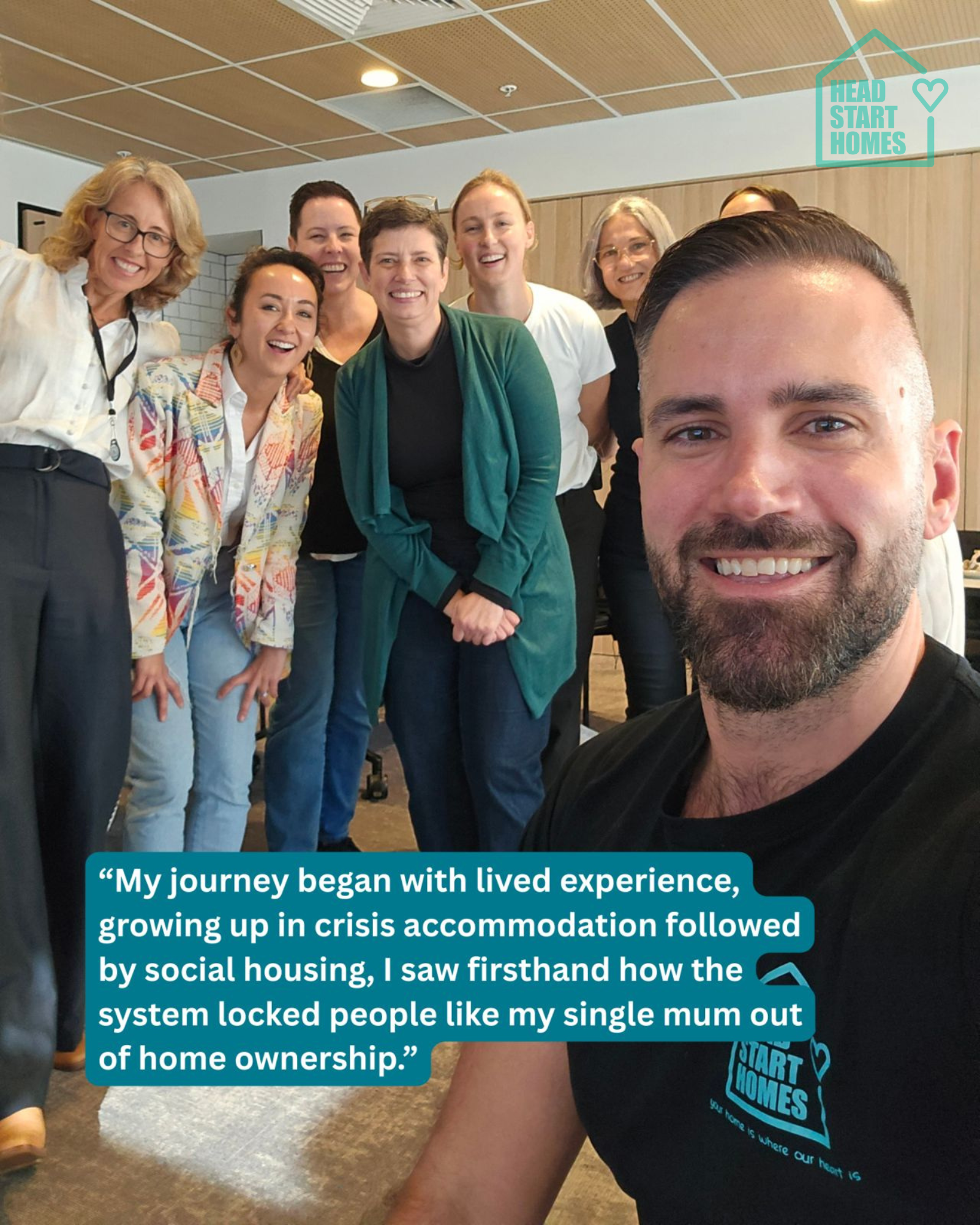
Their stories were reinforced by equally thoughtful and challenging contributions from many other incredible speakers across lived experience, policy, research and service delivery. Together, they painted a clear picture of how consistently older renters are being let down, and why change cannot wait. The event was also facilitated by housing sector leaders Jackson Hills (National Shelter CEO), Karen Walsh (Head Start Homes Executive Advisor) and Gemma Pinnell who helped create a collaborative and solutions-focused environment for participants.
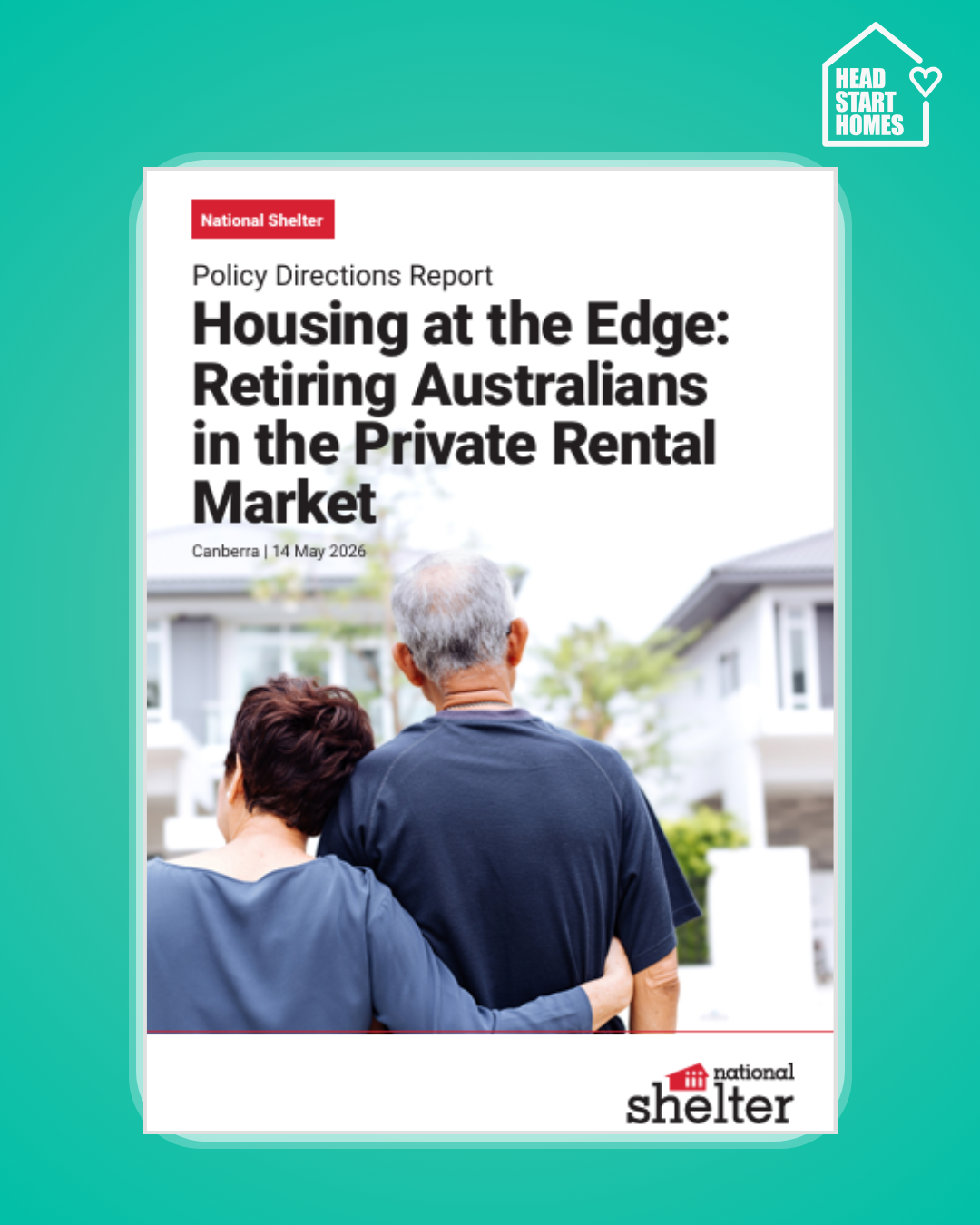
One of the strongest themes from the forum was the growing number of Australians entering retirement without home ownership. The report highlights that by 2031, an estimated 440,000 older households could struggle to access suitable or affordable housing and that many retirees renting privately are spending between 45% and 65% of their income on housing costs. The report concludes that renting into retirement is not a temporary issue but a significant structural shift requiring a coordinated policy response.
Head Start Homes was proud to contribute to both the forum and the resulting national policy report.
The Growing Challenge for Women Over 50
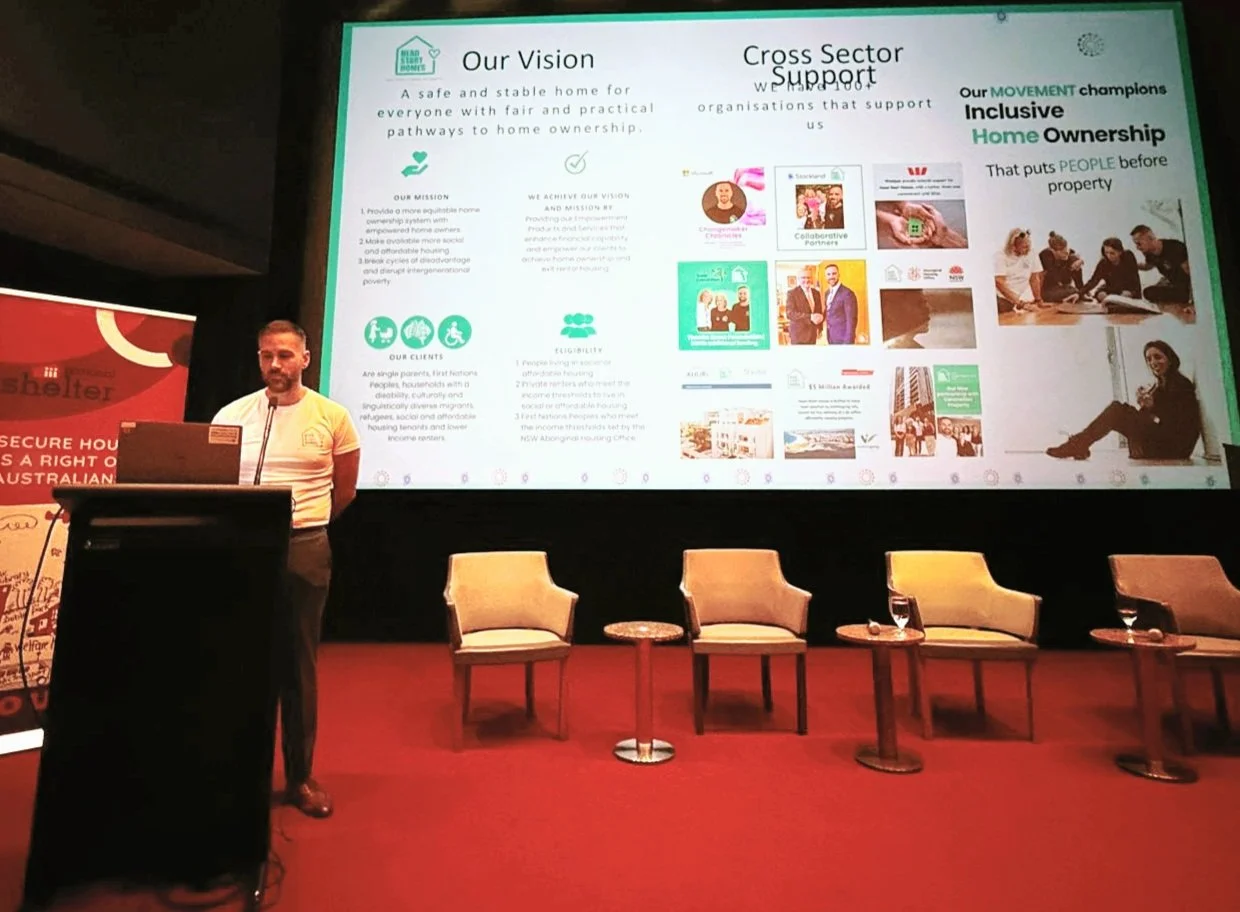
A key focus of the presentation by Stephen Woodlands (our Founder and Managing Director) was the experience of our women clients over 50 who are renting or at risk of renting into retirement. These women represent one of the fastest-growing cohorts experiencing housing insecurity and homelessness.
Drawing on the lived experience of our clients, we shared how many women come to Head Start Homes after years of doing everything society expects of them. Many have worked continuously, raised children, cared for family members and contributed to their communities. Yet they remain locked out of traditional home ownership pathways due to relationship breakdowns, financial coercion, domestic and family violence, caring responsibilities, rising housing costs and lending barriers.
Our presentation highlighted common experiences reported by women over 50, including:
Fear of homelessness.
Long-term rental instability.
Feeling unheard or excluded by traditional systems.
Repeated rejection from lenders.
Reduced borrowing capacity later in life.
Supporting adult children or grandchildren.
Caring for ageing parents.
Recovering from financial coercion and domestic and family violence.
These are not isolated stories. They reflect broader structural barriers that leave many older women vulnerable despite decades of work, contribution and resilience.
Demonstrating What Works
Importantly, Head Start Homes was able to bring more than research and policy ideas to the conversation. We brought evidence of real-world outcomes.
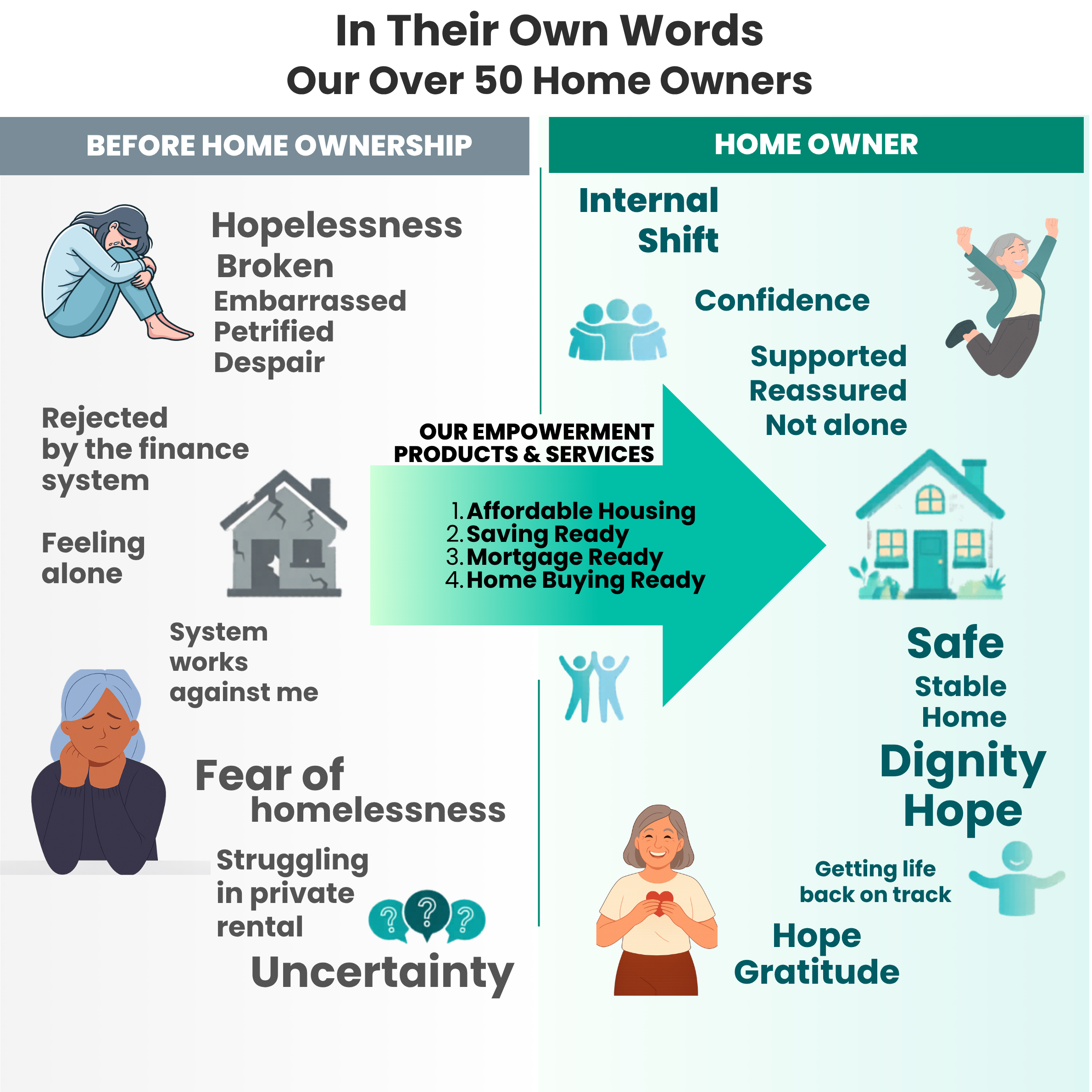
At the forum, Head Start Homes shared practical evidence that home ownership remains achievable for many older Australians when the right supports are in place. We highlighted how our Empowerment Products and Services have already supported seven single women aged between 50 and 63 into home ownership, demonstrating that age, rental history and previous financial setbacks do not need to become permanent barriers to housing security.
For these women, the outcomes went far beyond purchasing a property. Their stories reflected a transition from uncertainty and survival to confidence, stability and empowerment.
As one collective message from these clients expressed:
“We were just surviving within systems that kept us down - now we feel self-empowered and we are building intergenerational wealth.”
This message resonated strongly throughout the forum because it highlighted something often missing from housing policy discussions - that secure home ownership can provide not only housing stability, but also dignity, confidence, independence and the opportunity to create intergenerational outcomes for families.
Influencing the National Conversation
The final report reflects many of the themes raised by Head Start Homes, including:
Financial capability and early intervention.
Assisted home ownership pathways.
Shared equity models.
Rent-to-buy programs.
Community land trusts and permanently affordable housing.
Better connections between renting, affordable housing and home ownership.
Several of the solutions showcased by Head Start Homes were reflected in the report's recommendations, including financial capability initiatives, assisted home ownership pathways, shared equity approaches, rent-to-buy models and permanently affordable housing options. The report also emphasised the need to scale proven solutions and move beyond pilot programs to deliver lasting system-wide impact.
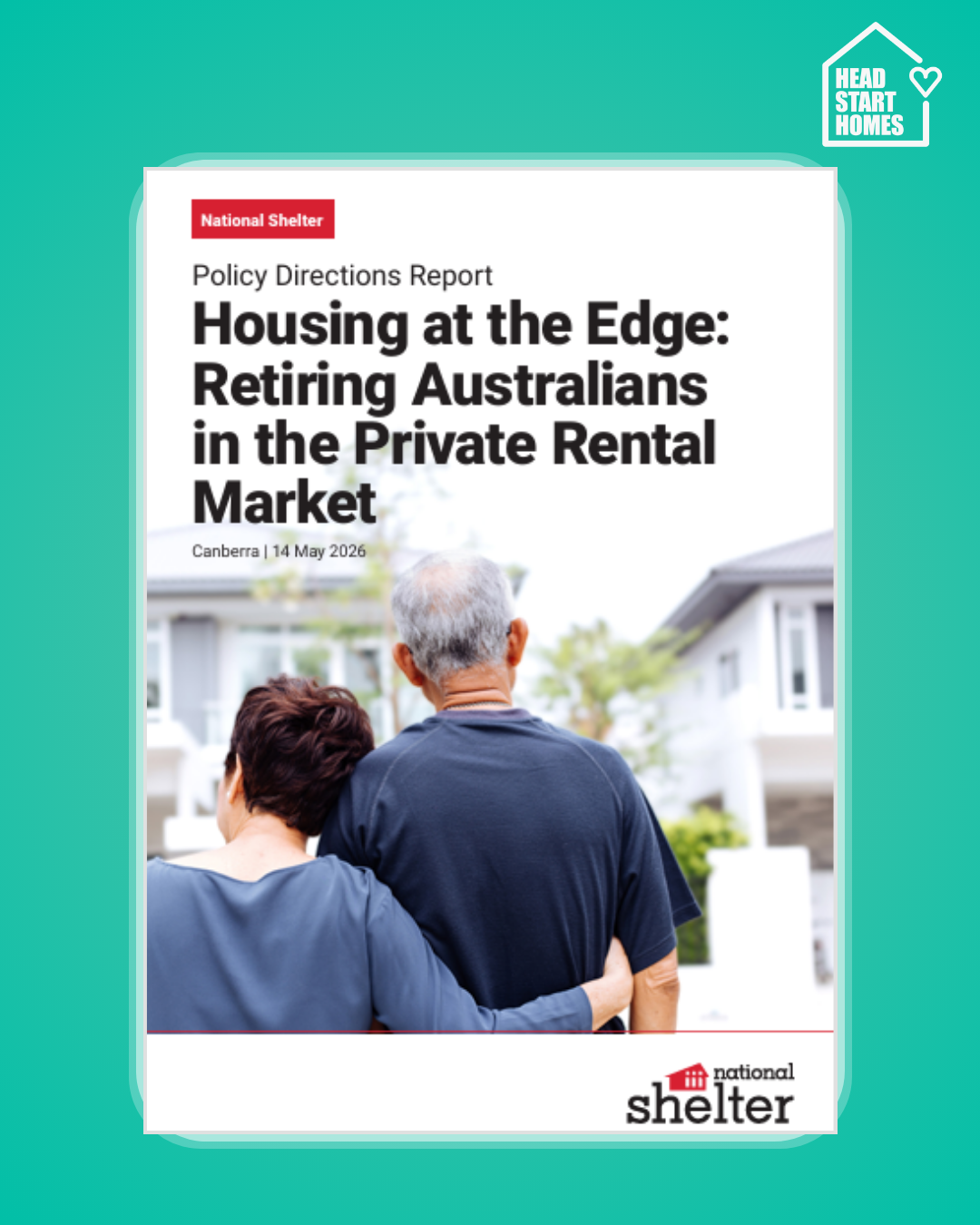
Read National Shelter's report
Housing at the Edge: Retiring Australians in the Private Rental Market
The report also references one of Head Start Homes' core principles - putting people before property - recognising the importance of creating a housing system centred on people, their needs, their dignity and their life journeys.
Looking Ahead
The release of the Housing at the Edge report represents an important step forward in the national conversation about housing security and ageing.
Importantly, this work brings together the voices and expertise of Jenny Horst, Coral Fuata, Dr Tom Alves, Eliza Owen, Dr Ed Wensing, NSW Rental Commissioner Trina Jones, Fiona York, Hariet Brummelhuis, Stephen Woodlands, Professor Louise Crabtree-Hayes, and Emma Nicholson.
While increasing social and affordable housing remains essential, Head Start Homes believes Australia must also expand fair and practical pathways to home ownership for people who have historically been excluded from the market.
For women over 50, and many others facing housing insecurity, the goal is not simply buying a house. It is achieving stability, dignity, independence and the opportunity to build a more secure future.
We thank National Shelter, Jackson Hills, John Engeler, Karen Walsh, AHURI, Faith Housing Australia, Housing for the Aged Action Group, National Affordable Housing, SGS Economics & Planning, Uniting NSW.ACT, Western Sydney University and all contributors for their leadership and collaboration on this important work. Together, we can create a housing system that supports people throughout their housing journey and provides a safe and stable home for everyone with fair and practical pathways to home ownership.